

As of December 1, Beta Technologies US Inc. has been incorporated in the United States of America. Beta Technologies will thus operate under its own corporate name from the new company instead of relying on the former joint-venture partner for the US market.
US operations and most of the world-wide invoicing will be handled by Jeff Brooks.
Since September, Beta Technologies’ CEO, Eggy Lippmann, has also been physically located in Munich, Germany, where we are currently establishing a market presence. For 2009, we’re preparing, as part of our expansion, to open offices in London, UK.

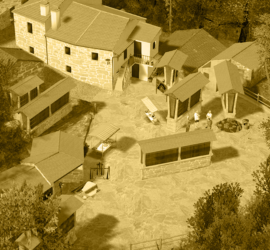
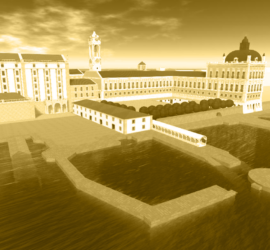
Coordinated by Profs. Alexandra Gago da Câmara and Helena Murteira from CHAIA (University of Évora), Beta Technologies deployed an historical representation of the city of Lisbon in 1755, shortly before it was destroyed by the 1755 earthquake, to be included in the presentation City and Spectacle: a vision of pre-earthquake Lisbon in the workshop Serious Games in Cultural Heritage at the VAST2008 (Braga, December 2, 2008).
Having previously recreated a model of the Royal Opera House, this latest project involves the recreation of the eastern side of the Terreiro do Paço (Royal Courtyard), including the palaces built by King Manuel and King Phillip, as well as the Terzi Tower. The recreation extends to the Phillipine Gardens behind the palace and the streets and courtyards leading to the Royal Opera House, which was included in this model.
This was also Beta Technologies’ largest-scale project based on OpenSim server technology, having been built in its entirety on Beta Technologies’ own OpenSim mini-grid. Internauts (residents subscribed to the Open Grid Public Beta Trial) are able to visit the 3D models directly; images are also available here.
In a long-term project, Beta Technologies has been modelling in Second Life® 19 European theatres (from Ancient Greece up to the 20th century) for the Theatron 3 project of King’s Visualisation Lab (part of King’s College London).
During this undertaking, old models from the Theatron 2 project (done on legacy technologies) are being adapted by Beta Technologies’ experts in virtual archeology so that they can be fully used as buildings inside Second Life. The extraordinary detail of the historical models require a high level of expertise to be properly recreated in Second Life, and be used by several European universities as objects for further study (which include the recreation of historical plays in its proper environment). The historical accuracy of the models and the research are provided by experts from King’s Visualisation Lab who supervise the work in close collaboration with Beta Technologies’ creative director, our specialist in virtual archeology (recreation of historical buildings in virtual worlds).
As part of the project, the Theatron Reservation System was also developed by Beta Technologies. This is a device allowing the universities participating in the Theatron project to register for a particular theatre to be displayed, select a “pedagogical pack” (usually a set or scenario specific to a certain play or epoch), and have the corresponding building rezzed at the apropriate time. The terrain of the “Theatron” simulator is also terraformed accordingly.
Continuing well into the third year of developing unique content for Language Lab, the first and largest language school entirely run inside the Second Life® virtual world, Beta Technologies designed Language Lab’s Registration Centre, with a mix of futuristic and Oxbridge elements, which will serve for potential students to have individual interviews with Language Lab’s teachers, as well as their welcome area.
The Arch Plaza and the Café (not shown) were also part of this project.
Developed separately, Beta Technologies also provided Language Lab with their own branded version of the Second Life® Client, which will soon be available for all students to log in to Language Lab’s areas.


Marco Aldany is the leading Spanish hair salon chain, being around since 1957 and having 400 franchised shops spread over Spain, Portugal, Central America, and Eastern Europe. Besides their hair salons, they also have their own hairdresser school, having trained more than 4,000 professionals.
Reaching out to more markets, their presence in Second Life®, integrated into the Beta Business Park, will aim a wide variety of potential customers: end-users looking for their unique styles (a few of which will be available for avatars to wear in Second Life); hairdressers looking for their school; potential interested parties in opening a franchise operation; and investors, as the group goes public on the Madrid stock market after being bought by the Chic Corporation.
Using Marco Aldany’s hypermodern and distinctive look, their presence in Second Life closely follows the look & feel of the real franchised shops. It features not only the hair salon but a space for the school. As an innovation, a special area was set apart to create a club — MAD — where Marco Aldany fans, friends, guests and visitors will be able to attend parties and special events, thus binding the community closely together in the virtual world.
You can visit the MAD Club at this SLURL.
For the second time, the University of Aveiro will be hosting cef^SL, a conference about the use of the Second Life® environment in Communication, Education, and Training/Teaching, which will be held in Aveiro from June 26th to the 28th.
Besides two full days with several tracks, the last day will be featuring an intensive workshop on Second Life programming, building, texturing, and avatar personalisation. For the conference itself, about 20 scientific papers were submitted and approved to be presented.
Sessions will be mostly in Portuguese, although a few will be in English as well, and many presentations will be done via Second Life or videocasting, in what has become the most mixed-reality event in Portugal.
Beta Technologies will once more be an official sponsor of cef^SL and welcomes all partners and clients to attend what should be one of this year’s highlights in the roll of conferences about Second Life® in Portugal.
Dolce Vita is an international shopping centre chain in Europe with a strong presence in Portugal. They’re launching a contest for the “Best Fashionable Avatar” in the Second Life® virtual world.
To register, you only need to go to a Dolce Vita kiosk and touch it to get an unique registration code. With that code you can now send postcards with pictures of your avatar and have them displayed on a voting site. The 10 most voted avatars until May 15th will be invited to a fashion show (with live music) on May 16th, where a jury will pick their choice among the best. Contestants can pick up free clothes (up to a limit) from the Portuguese fashion designer Maria Gherardi on her MG Fashion shops in Second Life.
The winner will get a voucher to spend €500 on any Dolce Vita Shopping Centre in Portugal. There will be a second round of voting on May 23rd with another €500 to be won.
All design and programming were developed by Beta Technologies.
Languagelab is the world leader in a new approach to language learning. The approach combines the interactive and social potential of virtual environments with highly qualified, innovative teachers from around the world to provide a unique space for formal and informal learning. And all of this can be accessed from your computer. Learning in Languagelab is memorable and effective, realistic and immersive, targeted and informal, collaborative and enabling. Their project is quite long-term, and they have been developing in Second Life for a few years, even introducing voice technology well before Linden Lab released their own software.
Beta Technologies has been working with Languagelab from the very start, creating realistic content for the many settings and environments used to teach classes in several languages.
Artesia helps Slovenian’s public broadcaster enter Second Life, build a community

LJUBLJANA, SLOVENIA, EU (March 25, 2008)
MMC, new media department of Slovenian public broadcaster (RTV Slovenija - http://www.rtvslo.si/) is entering Second Life on March 29th. The island, called MMC, is an extension of its Multimedia Center. The purpose of their Second Life presence is to extend its web community into Second Life by allowing users to schedule and hold events. They have partnered with community consultants Artesia (http://www.artesia.si/english) and the experienced virtual world architects Beta Technologies (http://betatechnologies.info/) in the execution of an ambitious Second Life project.
MMC has always been on the forefront of technology - it was among the first to webcast its programs and to enable web access to its digital archives. The extension of their activities into virtual worlds was a natural next step for the Multimedia centre of RTV Slovenia.

We are completing the move to our new locations in Lisbon and do apologise if you had any difficulties contacting us recently. Fortunately, Internet access has been restored during the weekend and we should be back on track next Monday!
Our contacts have been updated and we will soon announce new phone numbers for contacts and fax if you require them; obviously, all our emails and our in-world contacts will remain the same.